Private credit · BDC mark monitoring
Private Credit Performance Monitoring
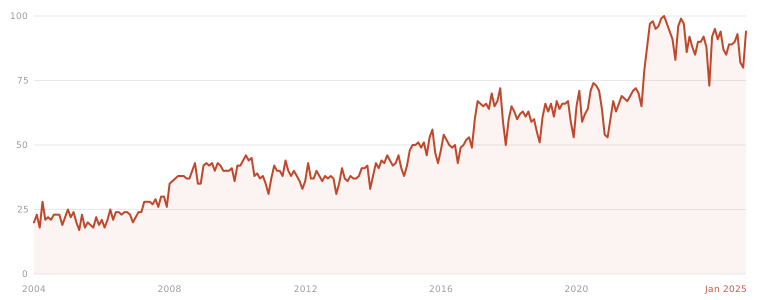
Live appbdc.creditSince its invention around the turn of the century, Software as a Service (SaaS) has been the business model to beat. Steady cash flows meant multiples could grow, VCs could fund, and private equity had a strong cash stream to borrow against. No wonder it drew growing attention over the last two decades. Here is the search interest until January 2025 for SaaS as a topic:
Now through July 2026:
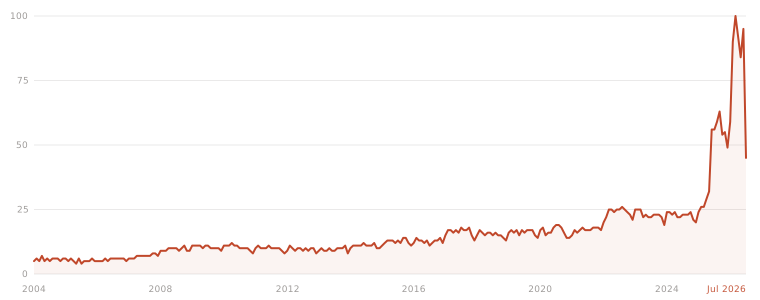
Claude Code, Fable, Codex, and RLVR have turned that safety upside-down, and portfolios are being reevaluated. Eight private-credit funds hold a piece of the same loan to Medallia, the experience-software company Thoma Bravo took private in 2021, and at the end of the first quarter they carried it at marks eighteen points apart. Same borrower, same collateral, the same SEC filings in front of everyone, and no agreement on what the loan is worth.
The disagreement is worth chasing now because coding is the first skill to truly fall to AI. Software was the ideal thing to lend against for a decade with its recurring revenue, high margins, customers who auto-renew. While some feel that custom software is the future, there is also a likely middle path where non-AI software is a commodity. Firms still buy software from vendors but now margins depend heavily on whether it holds a network effect, a proprietary dataset, something a competitor cannot rebuild as an autonomous AI project. All to say, it’s a tough time to have your cash flows highly levered.
In private credit, the mark each fund assigns the loan every quarter is where the strain surfaces first. The marks are private by construction, set by the manager and not a market, but BDCs disclose every position to the SEC, so the same loan appears in several funds’ filings at several different numbers. Rebuilding that across every BDC and every quarter converts the FT’s Medallia teardown into a standing view of where the softness is spreading.
The aim is to catch smoke before it becomes fire without losing the detail that made the Medallia teardown valuable. We can monitor drifting mark agreement, shares of interest taken in kind instead of cash, footnotes conceding amendments. One filing read in isolation says little, but all of them read together give us the market.
What it answers
- Track the marks on the whole cohort of PE-owned software borrowers across every fund that holds them.
- See who marks down first or last, which marks are most trustworthy.
- Interest taken in kind is income a fund books without cash arriving, but also requires a stronger balance sheet. Watching changes in payment can surface distress.
How it’s built
- Every BDC files its Schedule of Investments each quarter, and the pipeline reconstructs each one into a loan-level record.
- The same borrower shows up under different names across managers, e.g. Acme Corp, Acme Holdings LLC, Project Acme. Folding those into one debt stack requires strong entity resolution, first matched deterministically where names and loan economics line up, then with AI to match the rest.
- A mark gap only means something between identical instruments. Holdings are matched on seniority, reference rate, spread, and maturity before any two marks are compared.
- An AI reads the MD&A and footnotes for amendments, restructurings, and non-accrual language, and the panel labels its own terminal events so the marks can be graded against outcomes.
What it shows
The app itself is its own version of our thesis. There are providers that do this already as a data product (e.g. SOLVE, KBRA DLD, and BDC Reporter) and the core question is can we do better when we want to customize our analysis and do they serve data that we can’t access.